If you’re not seeing some images or content, it might be because certain cookies are disabled—most likely the Unclassified Cookies category. To ensure all images and links display properly, please enable the necessary cookies in your Consent Preferences. For more details, you can review our Privacy Policy and Cookie Policy. Please update your preferences to get the full experience!
First 5 Issues You’ll Face As a Funded SaaS Startup (And How To Be Prepared For Them)


Raising your first funding round can easily be listed in the top 3 startup experiences.
Team morale is high.
You can catch a breather.
Someone actually gave you money to pursue your idea further.
Heck, you might even give it a little celebration!
Now that all of that is settled, it’s time to get back to work & deliver.
Here are 5 most common first issues you’ll face in the upcoming period:
01 Investor pressure


It’s no longer a 2-friends game.
You just introduced a new entity into your business, and naturally, they expect stuff to progress.
Investor pressure can bring more heat to the table, setting the expectations high, while the team may not be ready for this output capacity.
New deadlines.
Old problems.
So how do you handle it?
First off, you need to understand the type of expectations you have from your investors.
Is it to build new features that will attract potential customers?
Is it to invest into more marketing distribution?
Is it just to pick up the phone and call your leads?
Whichever goal you agreed upon, you need to focus your efforts into that bucket.
Which leads you to your next challenge.
02 Hiring too fast while lowering the bar


Naturally when it comes to increased workload capacity, you need to expand your staff.
We all know how recruitment process can be tiring, and time-consuming.
But what if you quickly need to scale your team from 5 to 20 all of the sudden?
Hiring 15 A players in such a short timespan is close to impossible.
That’s where the agencies come in.
When it comes to software development, our agency helps you solve this exact problem.
We help you onboard a team of highly skilled developers that can help you scale your development faster while keeping the risk minimal.
You can expand your engineering team by 50-80% in less than 30 days, receiving pre-vetted highly qualified software engineers with 4+ years of industry experience.
Best part?
They become an external part of your team, joining your daily meetings and weekly refinements.
Same goes for sales, marketing, or any other department really.
So if you’re a SaaS startup that just got funded, consider reaching out to an agency of your choice that can help you scale your efforts further.
03 Tracking the right growth metrics

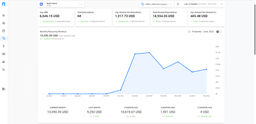
It’s easy to get lost in tracking vanity metrics.
Headcount growth,
Website visitors,
Features shipped.
All cool on paper.
But do they help you see the real picture?
Doubt it.
Conclusion?
Stick to the basics.
We recently released an article about the 5 core metrics you should be tracking as a SaaS founder.
You can check it out here: https://nortiksoftware.com/blog/5-core-metrics-you-should-be-tracking-as-a-saas-founder/
04 Rapid infrastructure scaling

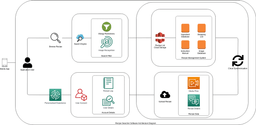
Your “quick fix” just to get through won’t cover it anymore.
With all of the points above such as investor pressure, new engineering force joining and you having to jump on the business side more and more,
You need to create a system.
Your infrastructure now needs to grow from the MVP phase into the revenue phase.
Naturally, this brings technical overhead and you need to revisit your core in order to prepare it for growth.
Having an in-house CTO definitely helps, but doesn’t solve the problem completely as they can’t handle all of the workload themselves.
Main goal is to rebuild the key components (caching tiers, publish/subscribe APIs), and introduce autoscaling patterns to absorb traffic spikes without degrading UX.
The hardest part?
Making the rest of your team stick to your development practices.
Here it’s best to create a development guideline doc that focuses on dev processes.
Your standard of commit messages,
Your standard of code readability,
Your standard of components.
Rapid infrastructure scaling is definitely one of the biggest challenges for funded SaaS startups, as feature requests are coming in from both ends – users & investors.
Your goal is – don’t get lost in the jungle.
Prioritize features that drive revenue first, and don’t just throw code blocks left and right.
Structure is key.
A good product manager might be a hire to consider in this stage as well.
05 Not having a clear development roadmap

Let’s be fair.
If you don’t have a dev roadmap in the first place, it’s likely you won’t get funded at all.
So let’s speak about a high quality development roadmap instead.
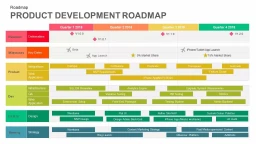
A solid roadmap isn’t just a list of features — it’s your strategic filter.
It protects your team’s focus, sets the pace for shipping, and aligns every department around why you’re building what you’re building.
Here are 3 key components that separate a good roadmap from a great one:
01 Clear problem prioritization
Most startups make the mistake of listing features they want to build.
But the best startups list problems they want to solve.
For example:
Bad roadmap → “Build integrations with Notion, Slack, and Figma”
Good roadmap → “Improve workflow continuity for async product teams”
Pro tip: Prioritize pain-points and outcomes and not “nice-to-haves”
02 Clear time frames
A great roadmap should have clear time frames and a bias for action.
Without time-scoping, projects balloon & teams burn out.
Companies like Basecamp and Linear popularized the idea of 6-week product cycles — long enough to build meaningful work, short enough to stay agile.
Pro tip: Break big initiatives into time-boxed bets (2–6 weeks) and use shaping (a la Basecamp) to define what “done” means before a line of code is written.
SCRUM can be your best friend as well.
03 Make them public
When your users know what they can expect in the future, they’re more likely to commit even if your product isn’t mature yet.
Make sure to introduce a public roadmap that highlights your next steps and expected launch dates.
You’ll appear more trustworthy.
At Nortik, we faced and solved every problem from the list above.
We also created a system on how you can avoid these issues in the future.
If you’re interested to discuss how we can help you solve 90% of your software development problems, be it staff scaling or code quality:
Let’s talk!
Book a free consultation here: https://nortiksoftware.com/consultation/
Stay connected, stay informed
Navigation
Useful links
Our Motto
Our success is fueled by strong partnerships. Together, we innovate, excel, and deliver work that works.Trusted by